
One of the most common misconceptions about BIM is that implementing BIM will automatically solve project problems.
It won’t.
BIM is Useful, Until It’s Not

BIM started as a practical solution that helped teams visualize designs, reduce errors, and improve coordination. But as standards, frameworks, and mandates evolved, the conversation often shifted from solving problems to satisfying requirements. Has BIM become more valuable over time, or simply more complicated? This article explores that question and invites an open discussion.
The Evolution of BIM: From 3D Models to Information Management

What we call BIM today is the result of a long evolution; from early object-based 3D models in the 1990s, to data-rich modeling in the 2000s, collaborative processes in the 2010s, and finally structured information management under PAS 1192 and ISO 19650. This article traces how BIM gradually shifted its focus away from geometry and software, toward managing information consistently, collaboratively, and across the entire asset lifecycle.
Why BIM Dimensions (3D, 4D, 5D) Are No Longer Relevant
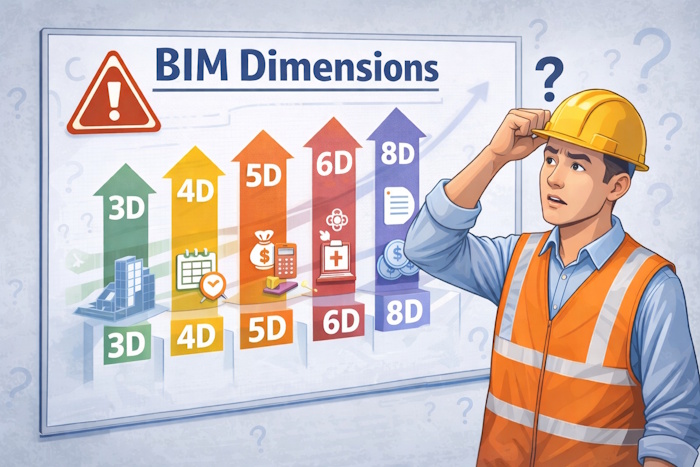
BIM dimensions such as 3D, 4D, and 5D are widely used, yet they often create ambiguity and misaligned expectations among project stakeholders. Rather than focusing on dimensional labels, this article proposes a more structured approach aligned with ISO 19650-by clearly defining BIM Uses and applying the appropriate Level of Information Need (LOIN). This shift enables more effective communication, efficient information delivery, and more successful BIM implementation.


